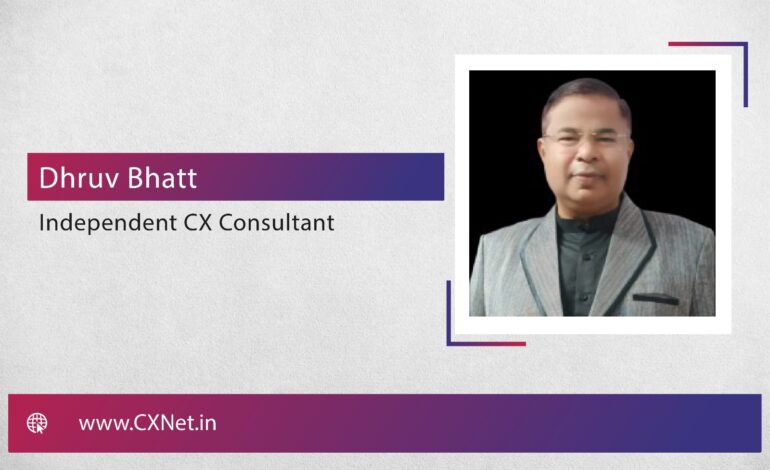
After more than a decade working at the intersection of customer relationships, operations, and strategy, I’ve come to believe one thing above everything else: customers don’t remember what you sold them — they remember how you made them feel. In today’s hyper-competitive market, a great product gets you in the door. But it’s the experience you deliver, consistently, across every single interaction, that earns loyalty, builds trust, and determines whether a customer returns — or quietly walks away.
Customer Experience, or CX, is no longer a support function. It is a strategic business driver. Organizations that treat CX as an afterthought are leaving revenue, reputation, and relationships on the table. Those that embed it into their DNA are the ones building the most durable brands in the world. Let me walk you through what truly great customer experience looks like — from the boardroom to the front lines.
1. Being the Customer’s Champion: Advocacy & Relationship Management
High-value customers — whether government bodies, PSUs, large enterprises, or strategic B2B partners — need more than a helpdesk ticket. They need a trusted face. Someone who knows their business, understands their pressures, and is personally invested in their success. As a CX leader, I have always believed in being that single point of escalation: someone who picks up the phone, takes ownership, and doesn’t hide behind process or policy.
When a strategic client faces a critical issue, transparent and timely communication isn’t a courtesy — it’s a commitment. Senior executives visiting your facility should leave with renewed confidence, not just with a polished presentation. Every customer interaction at that level is both a relationship-building moment and a reputation test. The way you handle difficult conversations, escalations, and uncomfortable truths speaks louder than any service brochure ever could.
True customer advocacy means representing the customer’s voice inside your own organisation just as powerfully as you represent your company to the customer. When those two are in balance, trust is built — and trust is the foundation everything else stands on.
2. Experience Strategy & Customer Journey Mapping
Too many organisations focus obsessively on the sale and forget that the customer journey has barely begun at that point. The journey starts long before a contract is signed — in the awareness stage, the first email exchange, the first demo — and it extends well beyond delivery, into renewals, upsells, and advocacy. Understanding and designing for that full journey is the backbone of a serious CX strategy.
I’ve spent countless hours mapping every touchpoint: acquisition, onboarding, implementation, support, escalation, renewal. And the pattern is almost always the same — friction hides in the gaps between departments. Sales hands off to delivery without context. Operations resolve issues without informing the customer. Support closes tickets without confirming satisfaction. These are not individual failures; they are system failures. And they are fixable — with the right mapping, the right metrics, and the right mindset.
Metrics like NPS (Net Promoter Score) and CSAT (Customer Satisfaction Score) are not just scorecards to show leadership — they are early warning systems. A drop in NPS today signals a churn risk tomorrow. A pattern in negative feedback reveals a process gap that, if left unaddressed, will cost far more to fix later. The goal of any CX strategy is to move from reactive firefighting to proactive engagement — anticipating needs before customers have to voice them.
3. Operational Excellence: Where Strategy Meets Execution
Even the most beautifully designed CX strategy collapses without execution. And execution lives in operations. Customer experience doesn’t belong to one department — it lives in every team. Sales makes the promise. Delivery fulfils it. Operations sustains it. And CX ensures accountability across all of them.
I’ve seen organisations invest heavily in CRM systems, customer portals, and real-time dashboards — only to watch them gather dust because no one created the habits and culture to use them consistently. Technology is an enabler, not a solution. The real work is building SOPs that people follow, escalation frameworks that surface problems quickly, and cross-functional rhythms that keep everyone aligned to the customer’s expectations.
When every department understands its role in the customer’s success story — and is held accountable for it — operational excellence stops being a target on a slide and becomes a lived reality. That’s when customers start noticing the difference, not because you told them you’re improving, but because they feel it.
4. Executive Reporting: Turning Data into Decisions
In any organization, what gets measured gets managed — and what gets reported gets resourced. As a CX professional, one of your most important responsibilities is translating customer sentiment and experience data into business language that leadership can act on. CX dashboards, escalation summaries, and trend reports are not just administrative deliverables; they are strategic inputs.
I’ve sat in boardroom presentations where a single well-framed CX insight shifted an entire product roadmap. I’ve also seen organizations ignore retention risk signals buried in their own data until it was too late. The difference is almost always in how the story was told. Numbers without context are noise. But when you connect a drop in CSAT to a specific process breakdown, or link a spike in escalations to an unmet customer commitment, leadership listens — and acts.
Equally important is the habit of documenting lessons learned from escalations. Every difficult customer situation contains a blueprint for improvement. When those lessons are systematically captured and integrated into SOPs, training, and product decisions, your organization gets smarter with every challenge it faces — rather than repeating the same mistakes under different names.
5. Culture: Making CX Everyone’s Responsibility
Here is the truth that most CX frameworks miss: tools, metrics, and processes can take you only so far. The most powerful CX transformation is a cultural one. It happens when a frontline team member takes ownership without being asked. When a mid-level manager prioritizes a customer commitment over internal convenience. When leadership models empathy before efficiency.
Building a customer-first culture requires deliberate, sustained effort. It means recognizing and celebrating customer-centric behavior at every level. It means making CX performance part of team reviews, not just customer service reviews. It means equipping people with the knowledge, authority, and confidence to resolve issues on the spot — rather than escalating everything upward and losing precious time.
I have seen organizations completely reverse their customer reputation not by overhauling their product or hiring more support staff, but by investing in their people’s ability and willingness to care. That investment compounds over time in ways that are difficult to quantify but impossible to miss.
The Bottom Line
Customer experience is not a department. It is not a project. It is not a quarterly initiative. It is a promise — renewed every single day, through every interaction, at every level of the organization. It is the sum of a thousand small moments: a response sent on time, a problem solved before it escalated, a customer made to feel heard rather than handled.
Get that right, consistently and sincerely, and everything else follows — retention, revenue, reputation, and growth. Get it wrong, and no amount of marketing spend or product innovation will save you from the slow erosion of customer trust. The organizations winning in CX today are not necessarily the ones with the biggest budgets or the most advanced technology. They are the ones where every single person — from the CEO to the frontline — genuinely believes that the customer’s experience is their responsibility.