Something extraordinary is happening in customer support right now. The interaction that once required a trained agent, a queued callback, and 32 hours of patience can now be resolved in 32 minutes — sometimes 32 seconds. Generative AI tools like Anthropic’s Claude and OpenAI’s ChatGPT are not just automating repetitive tasks. They are fundamentally rewriting the economics, the speed, and the language of customer experience.
This is not a future forecast. It is already underway — and the numbers are extraordinary.
The Numbers That Changed Everything
| 98% | Reduction in resolution time at peak AI implementations — from 32 hours down to 32 minutes (Freshworks) |
| 97% | Faster first response: from 15 minutes with human-only support to just 23 seconds with AI (Pylon) |
| 65% | Of incoming support queries resolved without any human intervention in 2025 — up from 52% in 2023 |
| $3.50 | Average return for every $1 invested in AI customer service — with top performers reaching 8x ROI |
| 2+ hrs | Saved daily by each support professional using generative AI for quick responses (HubSpot) |
From Scripts to Intelligence: What Changed
Traditional customer support was built on scripts. An agent would follow a decision tree: if the customer says X, respond with Y. It was consistent, but brittle — the moment a customer veered from the expected path, service quality collapsed.
Generative AI broke the script. Tools like Claude and ChatGPT can understand context, infer intent, adapt tone, and generate responses that feel tailored to the individual — not retrieved from a template. They understand nuance in a way that rule-based systems never could.
The result is a support experience that can handle a frustrated customer with empathy, walk a confused user through a technical process step by step, and escalate — gracefully and with full context — the moment a case exceeds its capability.
Rewriting Digital Marketing in Real Time
The impact of generative AI extends well beyond support queues. In 2026, the line between customer support and digital marketing has blurred almost beyond recognition — and AI is the reason.
Consider what happens when a customer interacts with an AI-powered chat on a brand’s website. The interaction isn’t just support — it’s a marketing touchpoint. The AI personalises messaging in real time based on browsing history, past purchases, and stated preferences. It can surface relevant offers, explain product benefits in conversational language, and resolve objections that would have previously ended in cart abandonment.
Personalisation at Scale
This is the capability that brands have chased for a decade and only now have access to: genuine one-to-one personalisation across every digital channel, at scale, without a proportional increase in headcount.
- 70% of mid-sized businesses report a 40%+ improvement in CSAT within three months of adopting AI agents
- 64% of customer service reps using AI say it helps them personalise their messages to customers (HubSpot)
- Retail spending through AI chatbots is projected to reach $72 billion by 2028, up from $12 billion in 2023
- 75% of consumers now believe generative AI will transform their customer service experiences
Klarna’s widely-cited deployment offers a striking case study: the company’s AI reduced average resolution time from 11 minutes to 2 minutes — while simultaneously improving satisfaction scores. Bank of America’s AI assistant Erica has now handled over 2 billion interactions and resolves 98% of queries within 44 seconds, with clients engaging with it 56 million times per month.
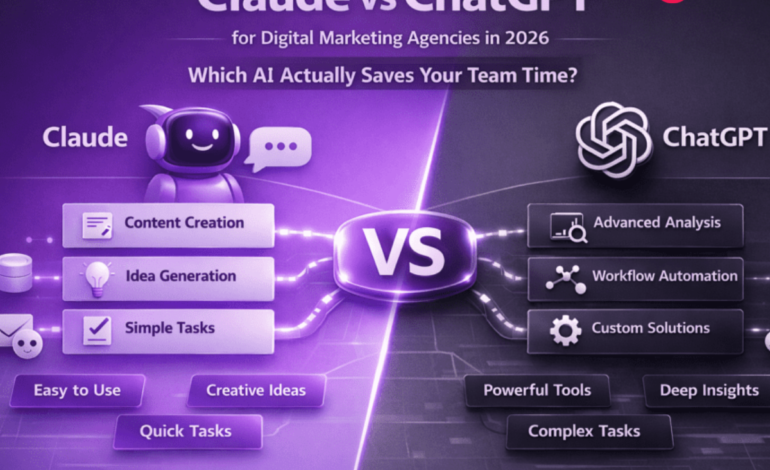
Claude vs ChatGPT: Different Strengths for Different Needs
Not all generative AI is the same, and the distinction between leading platforms is increasingly meaningful for CX leaders choosing their tools.
ChatGPT: Speed and Scale
ChatGPT, built by OpenAI, maintains dominant consumer market share — roughly 60% globally — and leads on generation speed. For high-volume, straightforward customer interactions, its speed and broad integration ecosystem make it a strong default choice. It excels in rapid-fire Q&A, multilingual support at scale, and deployment through popular channels like WhatsApp, web chat, and voice interfaces.
Claude: Depth, Safety and Enterprise Trust
Claude, built by Anthropic, has taken a different path — and in enterprise customer support, it has become the market leader. As of 2025, 70% of Fortune 100 companies use Claude, and Anthropic’s enterprise revenue surpassed OpenAI’s in mid-2025. Claude holds approximately 29% of the enterprise AI market.
What sets Claude apart for CX teams is its ability to handle long, complex conversations with exceptional consistency. With a context window of up to 200,000 tokens, Claude can hold the full thread of an extended support interaction — or review an entire account history — without losing coherence. Its emphasis on safety, transparency, and compliance makes it particularly strong in regulated industries: financial services, healthcare, and insurance.
The practical choice for most organisations isn’t one or the other — it’s designing a system where the right model handles the right task. High-frequency, low-complexity queries routed to speed-optimised AI. Complex, sensitive, or regulated interactions routed to a deeper reasoning model. Human agents reserved for the edge cases that require genuine empathy and judgment.
The Human Equation: Augmentation, Not Replacement
The most common fear around generative AI in customer support — that it will replace human agents wholesale — is both understandable and partially misguided.
Gartner does predict that organisations will replace 20-30% of service agent roles with generative AI by 2026. But the same research notes that 50% of companies that cut CS staff due to AI are expected to rehire by 2027 — because AI handles volume, not nuance. The organisations finding the most success are those treating AI as an augmentation layer rather than a replacement strategy.
- 84% of customer service professionals using AI say it makes responding to tickets significantly easier
- 74% of agents report AI copilots helped them feel more confident resolving complex cases
- Support agents using AI tools handle 13.8% more customer inquiries per hour on average
The most effective hybrid model is clear: AI ensures efficiency and reliability. Humans ensure connection and trust. Together, they create service that meets today’s speed expectations while delivering the empathy that complex situations demand.
What This Means for CX Leaders in 2026
The window for treating generative AI as an experiment has closed. With 91% of customer service leaders under pressure to implement AI — and 9 in 10 contact centres already using it in some capacity — the question is no longer whether to deploy, but how to deploy well.
The organisations gaining competitive advantage are those that have moved beyond chatbots and into genuine AI-augmented workflows: where AI surfaces the right information to agents in real time, handles the entire lifecycle of routine queries, and generates proactive marketing messages that feel personal rather than automated.
Resolution times are falling. Satisfaction scores are rising. The cost-per-interaction is dropping. And the brands that are realising all three of those things simultaneously are the ones that have found the right balance between the speed of AI and the irreplaceable quality of human judgment.
Generative AI is not the future of customer support. It is the present — and the organisations that treat it as such will define what great customer experience looks like for the rest of this decade.